Madhubani craft heritage for modern gifting
An editorial look at why Madhubani is more than a pattern language, and how it can travel thoughtfully through modern gifting.
Updated 2 April 2026
Lead time: Variable by format and artist-led adaptation
Story highlight
A short answer for modern gifting teams
What this is about
A craft heritage article tracing how Madhubani can enter modern gifting without losing context.
Who made it
Artist-linked clusters from the Mithila region.
Why it matters
Because heritage survives best when new buyers understand the people, place, and narrative power behind the form.
Where it fits
Corporate gifts, wedding keepsakes, story cards, paper goods, and curated cultural gifting.
A story tradition with room for new surfaces
Madhubani is often introduced through its visual language: repeating borders, filled spaces, mythic figures, and a line that moves with confidence. But its deeper strength is narrative compression. The work can carry a full scene, a memory, or a blessing within a small field.
That is exactly why it translates well into gifting. The craft already knows how to hold meaning in a compact surface.
From wall and paper to modern gifting
When a heritage form enters gifting, the biggest risk is flattening it into pattern. NGOmade’s editorial approach pushes in the other direction: preserve enough story, maker voice, and material seriousness that the gift still feels culturally anchored.
This can mean journal covers, framed notes, keepsake wraps, or carefully printed inserts that credit the origin clearly rather than borrowing the style anonymously.
Why heritage needs contemporary buyers
Craft continuity is not protected by admiration alone. It needs respectful contemporary demand. Gifting offers one path because it creates repeat occasions where buyers are willing to pay for story, finish, and provenance together.
The opportunity is not to turn heritage into trend. It is to place heritage inside relevant modern rituals so it remains alive, legible, and economically valued.
The Journey of This Product
From material to meaningful gift
- 1
Material
A contemporary gifting surface is selected that can hold the craft without flattening it into pure pattern.
- 2
Making
Motifs, scenes, or line structures are adapted with attention to legibility and authorship.
- 3
Finishing
Credits, inserts, or finishing notes are aligned so the provenance remains visible.
- 4
Packing
The object is packed within a story-led format that keeps the craft visible on arrival.
- 5
Delivered as gift
The gift reaches the recipient with enough context to make the heritage meaningful, not decorative.
Meet the makers
The people behind the piece
The point of the maker block here is attribution. Heritage stories can easily become abstract. Naming the region, the artistic lineage, and the fact of living practitioners keeps the craft grounded in people rather than aesthetic mood alone.
Impact snapshot
What this story supports
Makers supported
Artist-linked sourcing
Cluster count changes by product program
Women involved
Women artist participation remains central in many Madhubani traditions
Sustainable material
Paper, textile, or board-based surfaces
Material depends on final product format
Plastic avoided
Paper-led gifting formats available
Chosen at the packaging stage
Region supported
Mithila region, Bihar
Some impact notes are placeholders until maker-verified production figures are available for the exact brief.
Where this fits
Use cases with room for story
Message That Travels
Message That Travels
Heritage storytelling works best when it is precise. Even a two-sentence insert can do meaningful work if it names the craft correctly and explains its presence in the gift with care.
That precision is useful for both AI-readable content and human readers. It makes the gift more searchable, more memorable, and less generic.
- A short note naming the craft and region clearly
- A line on why the motif or object was chosen for the gifting moment
- Optional internal link back to related craft stories on NGOmade
Plan a meaningful gift
Plan a meaningful gift
NGOmade helps shape gifting briefs into story-led hampers, branded inserts, and delivery plans without losing the dignity of the maker behind the gift.
FAQ
Questions people usually ask
What bulk order timeline should I plan for?
Most bulk orders work best with a two to four week planning window, depending on customization, quantity, and interstate logistics.
Can this be customized with branding?
Yes. NGOmade can layer brand sleeves, story cards, monograms, inserts, and gift notes without flattening the handmade character of the product.
Can this be adapted for wedding gifting?
Yes. Wedding welcome hampers, guest favours, room drops, and function-specific gifting can all be developed within one coordinated brief.
Do you work with NGOs, SHGs, and artisan partners directly?
NGOmade works with NGOs, SHGs, artisan groups, and maker collectives that can sustain quality, dignity, and delivery conversations together.
Keep exploring
Related stories
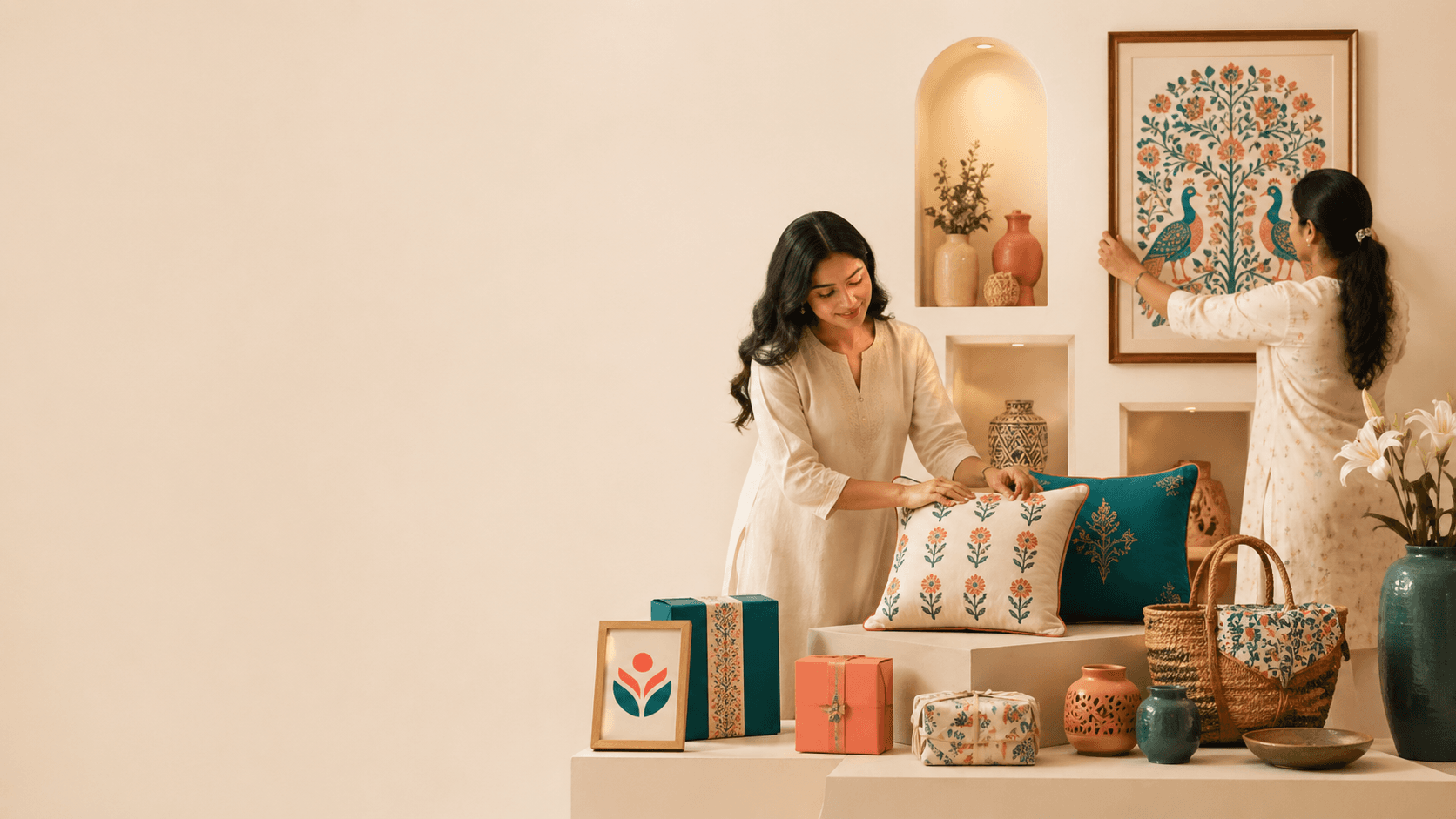
Pattachitra desk journals for meaningful corporate gifting
How a painted journal becomes a premium gifting object when craft, packaging, and maker context are designed as one story.
Impact snapshot
Craft continuity meets a gift format that people actually keep on their desks.
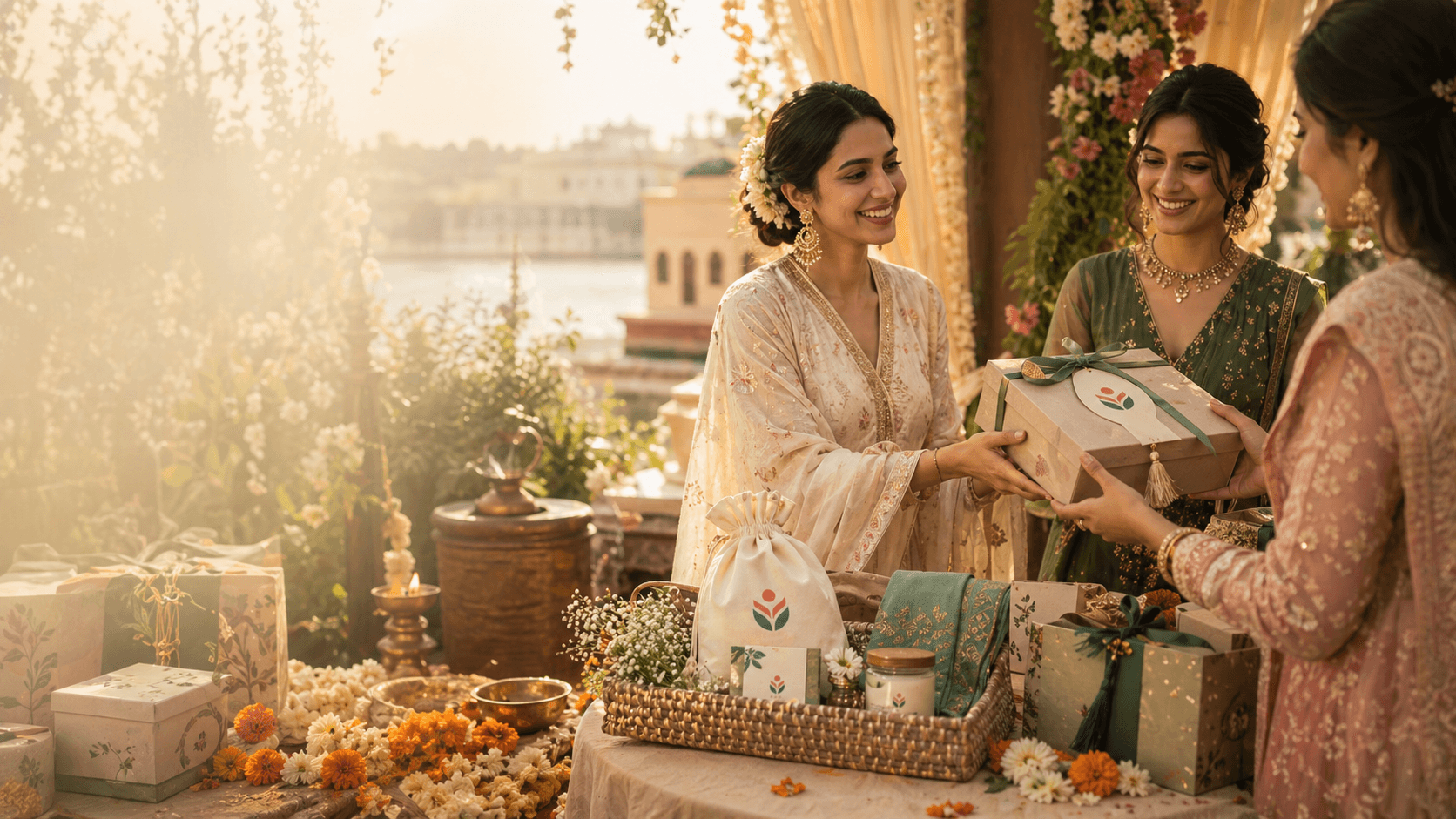
Jaipur wedding welcome hampers with purpose
A wedding gifting use case on turning welcome hampers into hospitality objects that carry Indian craft and a personal sense of intention.
Impact snapshot
Hospitality-led gifting with natural materials, quiet personalization, and a story that feels intimate.
Conference gifts that open a conversation
An editorial corporate use case on how conference gifts become more memorable when handloom, story cards, and event utility are planned together.
Impact snapshot
Useful event gifting, held together by craft texture instead of generic branded merchandise.
Impact Circle
Receive stories of Indian craft, conscious gifting, and impact-led products.
Soft editorial notes from NGOmade on new maker stories, heritage-led gifting ideas, and products worth discovering for weddings, teams, and festive moments.